Using Visual Language Models for Multimodal Disaster Classification.
This project investigated the usability of text and images for Disaster classification. We leveraged Multi Modal Data from CrisisMMD and compared the performance of Visual Language Models with Contrastive Objectives against a Knowledge-infused and Explainable Multimodal Attention Network to classify Multiple Disaster based Tasks.
Apr 26, 2025
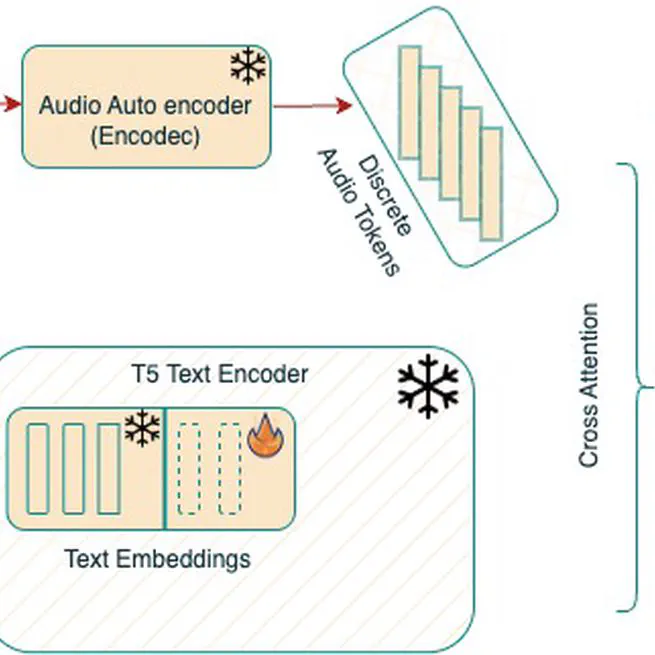
Textual Inversion for Controlable Music Generation.
In this work, we explored the use of Textual Inversion as a lightweight and effective approach for controlling style in text-to-music generation. Our findingdemonstrate that introducing learned tokens enables reliable steering of musical outputs, even with as few a5–6 training examples per style. This highlights thpotential of TI as an efficient method for style conditioning. Our experiments further show that training olonger audio sequences leads to richer token embeddings, improving text-audio alignment as measured bCLAP similarity. Overall, our results suggest that Textual Inversion offers a promising direction for enhancing controllability, consistency, and composability imusic generation systems like MusicGen.
Apr 25, 2025
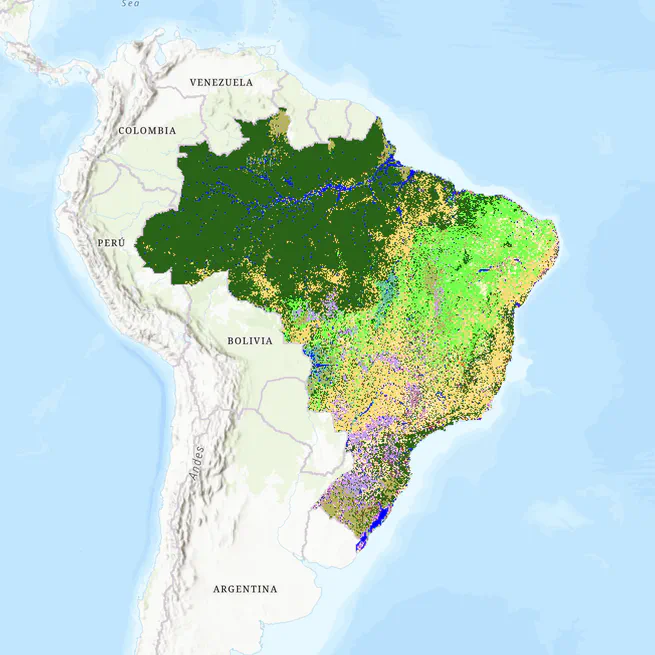
Forest Loss and Lang Use change in the Amazon.
In this project we uncovered the change in tree cover, Land Use and Biodiversity Trends in the Amazon Rain Forest since the 1980’s and the underlying sources among them encroachment of protected areas, conversion of forest areas to farm lands and population growth. This research project also uncovered Hotspots for species extinction and the need for stringent legal measures against deforestation.
Apr 25, 2025

Accelerating POCO Inference in 3D Reconstruction of Point Clouds.
In quest to obtain efficiency in 3D reconstruction of objects, we enhanced POCO (Point Convolution for Surface Reconstruction) by utilizing Graphical Attention Network for feature learning. Here we treated Point clouds as nodes in a graph and assigned variable weights (feature weighting) to point cloud neighbors and performed Occupancy prediction.
Nov 4, 2024